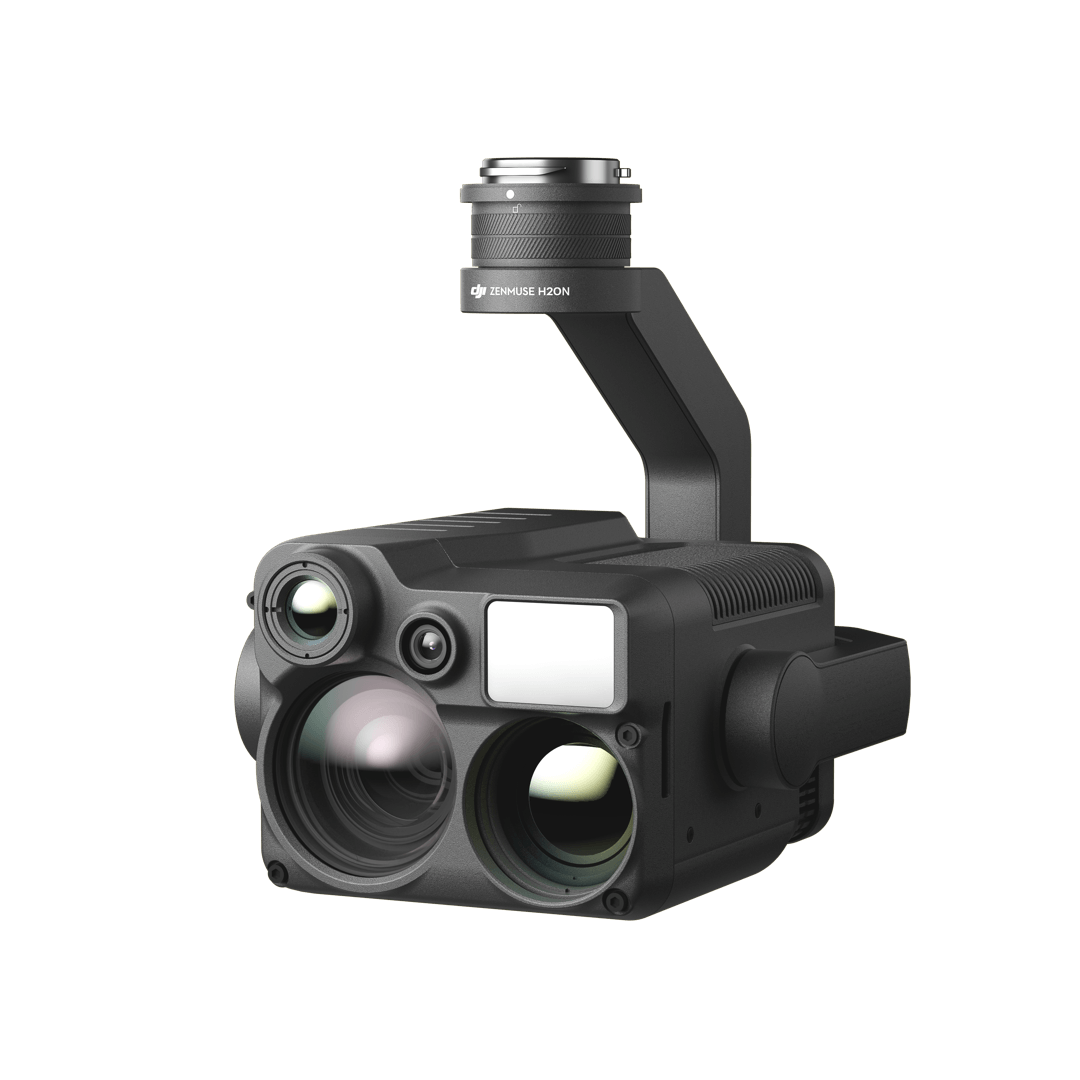
Detailed description
DJI Zenmuse H20N is a multisensor camera for night operations, combining Starlight sensors, dual 640×512 thermal cameras and 20× hybrid optical zoom.
DJI Zenmuse H20N — night vision and dual thermal imaging
DronExpert presents this payload for professional projects in Chișinău and across Moldova.
Benefits for night operations
- A 2 MP wide-angle Starlight camera provides context, while a 4 MP Starlight zoom camera examines selected areas.
- 20× hybrid optical zoom supports the transition from an overview to closer inspection.
- Two 640×512 thermal cameras use different focal lengths to combine broad coverage with observation of distant heat sources.
- Synchronised visible and thermal zoom helps operators compare the same area in both views.
- A laser rangefinder measures from 3 to 1,200 m under DJI's specified measurement conditions.
Applications
H20N supports search and rescue and site inspections. Operators can identify a thermal contrast, compare it with the visible image and establish the object's position. Switching between wide and magnified views supports a methodical examination of an area and its individual points of interest.
Compatibility
The camera supports DJI Matrice 300 RTK and Matrice 350 RTK. For M350 RTK, DJI requires payload firmware v7.0 or later. Check the equipment configuration and software versions before installation. The aircraft is purchased separately.
What to consider
The payload weighs 878 ± 5 g and operates from −20 to +50 °C. Its IP44 protection rating can decrease with wear. Temperature measurements depend on observation conditions, distance and the selected mode.
How does H20N differ from H20T?
H20N has two thermal cameras and Starlight sensors. DJI Zenmuse H20T has one thermal camera and a 20 MP visible zoom camera, compared with the H20N's 4 MP zoom camera.
Does Starlight replace thermal imaging?
Starlight produces visible images in low light. Thermal imaging detects infrared radiation and shows temperature differences. Viewing both helps relate thermal features to scene details.